Slow Cooker Corned Beef


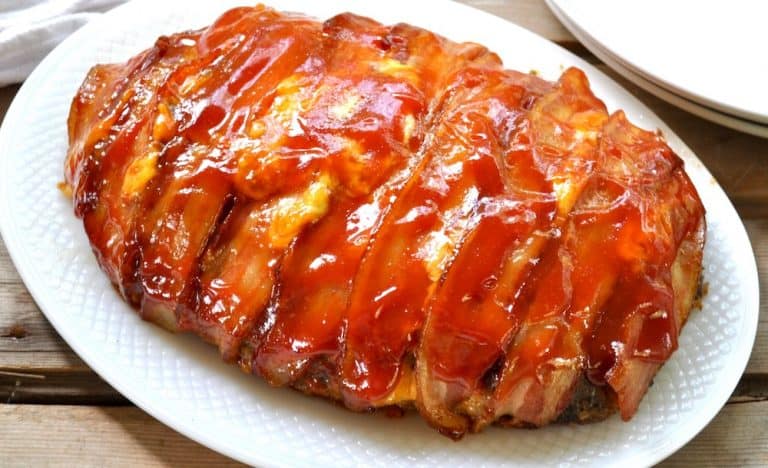
We love this recipe because it’s such an easy way to make a caramelized Corned Beef Brisket with almost no hands-on work. The slow cooker does the heavy lifting, giving you that soft, sliceable texture without constant checking. The quick broil at the end adds a sweet and savory crust that makes it feel like more than just braised meat. If you’ve ever wanted corned beef that feels a little special but still simple, this is it.
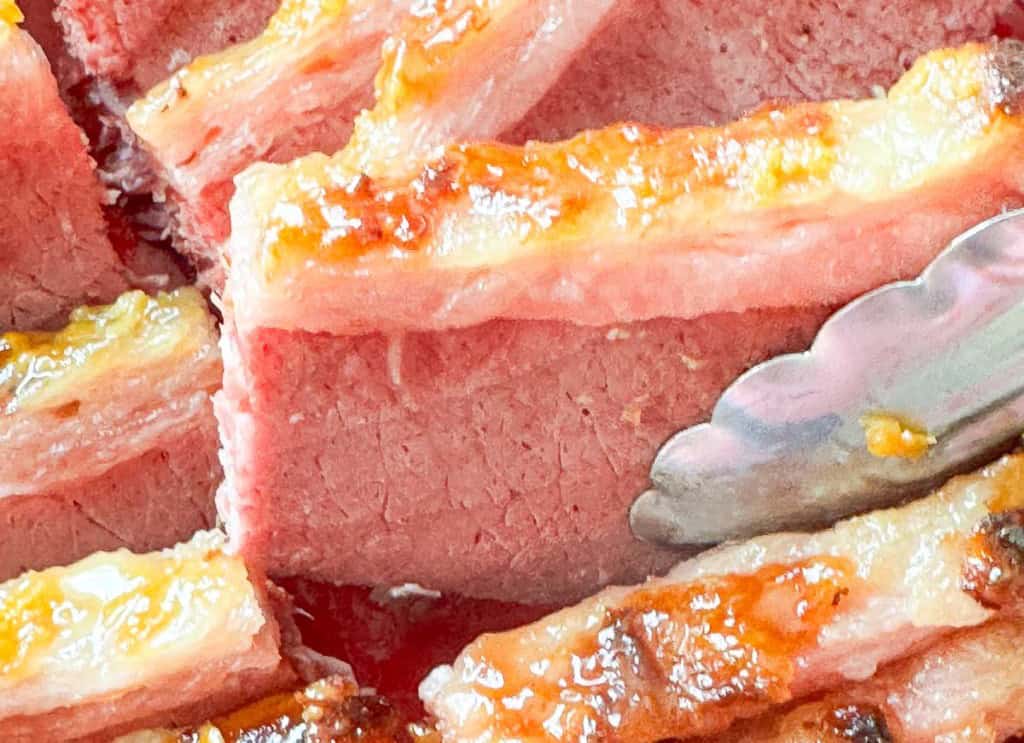
Caramelized corned beef has a deep, savory flavor from the slow cooking, with a lightly crisp, sweet layer on top from the brown sugar and mustard. The inside stays tender and juicy, while the broiled top forms a sticky, flavorful crust. The contrast between soft meat and caramelized edges makes each slice more interesting. It’s familiar but with just enough texture to stand out.
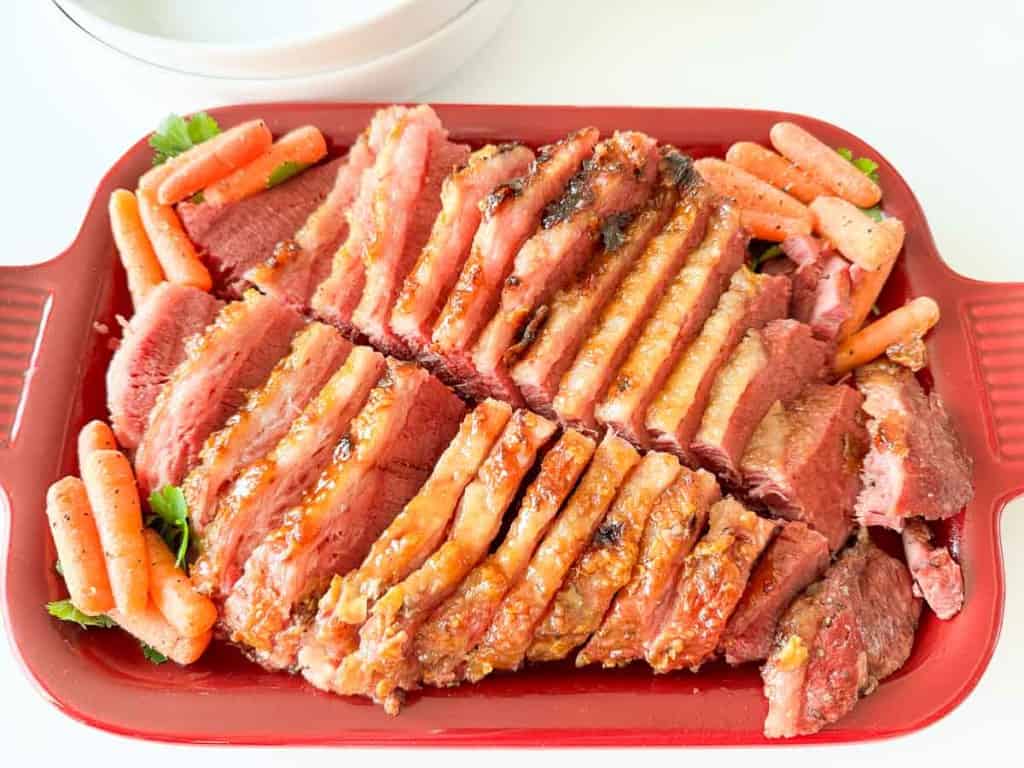
This recipe is ideal when you want an main dish that feeds everyone and still leaves leftovers. It’s simple enough for a weeknight but works just as well for a Sunday dinner. The ingredients are minimal, and the steps are straightforward. You end up with a meal that carries into sandwiches, hash, and easy lunches.
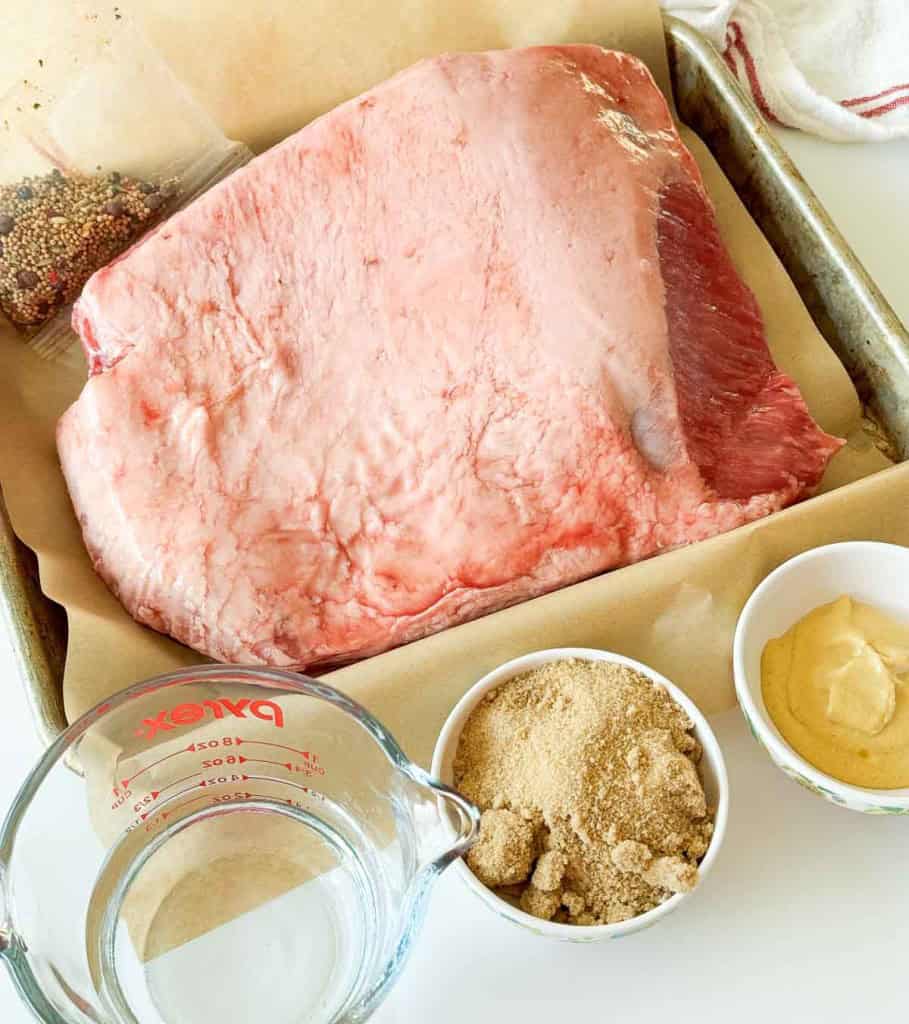
What You Need To Make This Corned Beef
The ingredient list is short and built around the brisket itself, with just enough added flavor to create that caramelized finish.
- corned beef brisket with spice packet
- water
- Dijon mustard
- brown sugar

Point Or Flat Corned Beef?
When it comes to corned beef, which is a cut of brisket, it comes in two cuts, point or flat. You can use either one for this recipe.
- The flat cut is a little leaner and slices neatly, making it ideal for even, picture-perfect slices. It’s often preferred for serving straight from the cutting board.
- The point cut has more marbling and fat, which makes it richer and slightly more tender. It can shred more easily, which works well for sandwiches or hash.
The choice comes down to whether you prefer leaner slices or a more marbled texture.

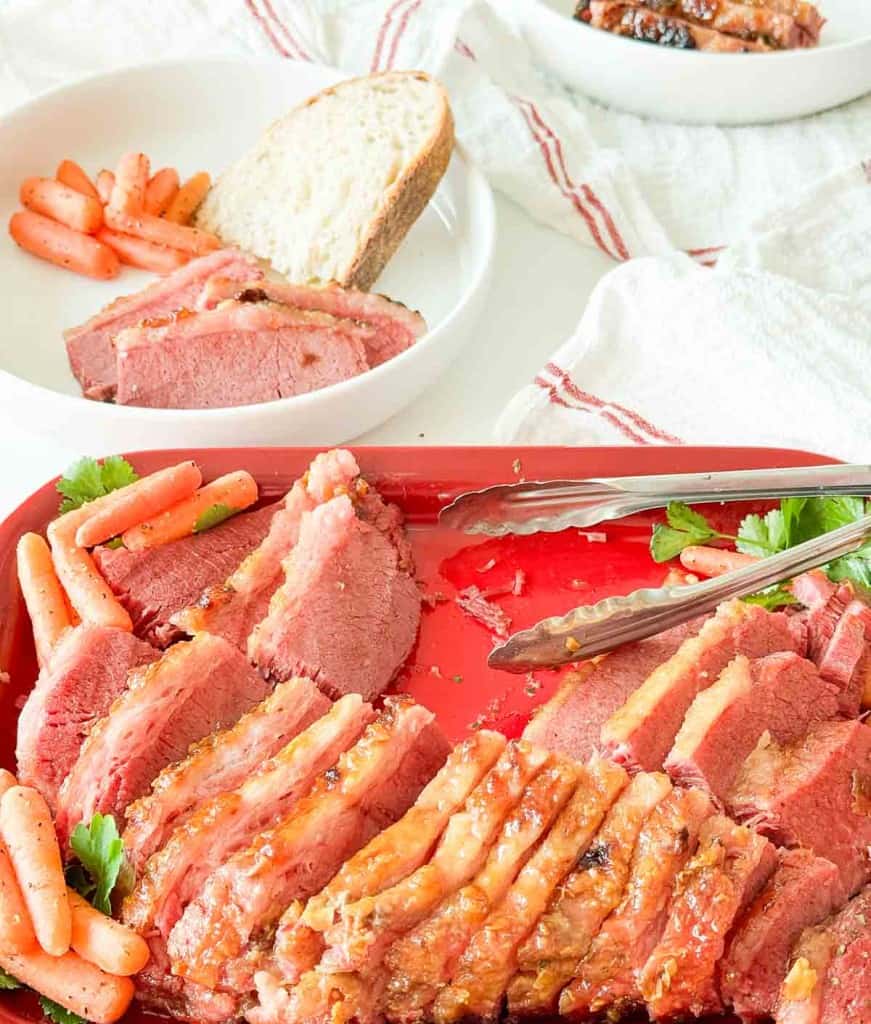
How To Slice Corned Beef Properly
Always start with a well sharpened knife. It makes cutting any meat so much easier. And beef sure to let the brisket rest before slicing so the juices stay in the meat.
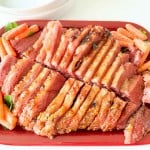
Slice against the grain in thin cuts for the most tender result. The flat cut is easy to slice in uniform pieces because the grain runs consistently in one direction. The point cut can have changing grain lines, so you may need to turn the meat slightly to keep slicing against the grain. Both cuts slice well when fully tender, which your brisket will be because you’ve braised it for 6-8 hours in the slow cooker.
Store Leftovers
Store any leftovers in an airtight container in the refrigerator for up to four days. Reheat it gently in a skillet with a splash of water or broth to prevent drying out. Leftovers also freeze well when tightly wrapped.
Try using leftovers in this hands off corned beef hash recipe. It’s also made in the slow cooker so you know 2 things it’s going to be easy AND it’s going to be ready to eat when you are!
Slow Cooker Corned Beef
Ingredients
- 1 corned beef brisket 3 to 4 pounds with spice packet
- 1/2 cup water
- 2 tbsp Dijon mustard
- 3 tbsp brown sugar
Instructions
- Pour the water into the slow cooker

- Add the spice blend from the packet to the water

- Place the corned beef brisket fat side up into the slow cooker

- Cover and cook on low for 8 hours or high for 4 hours until the brisket is very tender and jiggly

- Preheat the broiler
- Line a baking sheet with foil
- Transfer the cooked brisket to the prepared baking sheet fat side up
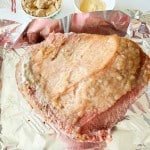
- Brush the top with Dijon mustard

- Sprinkle evenly with brown sugar
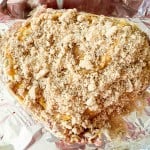
- Place on the lowest rack under the broiler
- Broil for about 10 minutes until the sugar caramelizes
- Watch carefully so it does not burn

- Remove from the oven and let rest 5 to 10 minutes before slicing
Video
Notes
- For best results cook on low for 8 hours until the brisket is very tender
- If cooking on high plan for about 4 hours plus broiling time
- Slow cooking on low gives the most tender texture
- Slice against the grain before serving